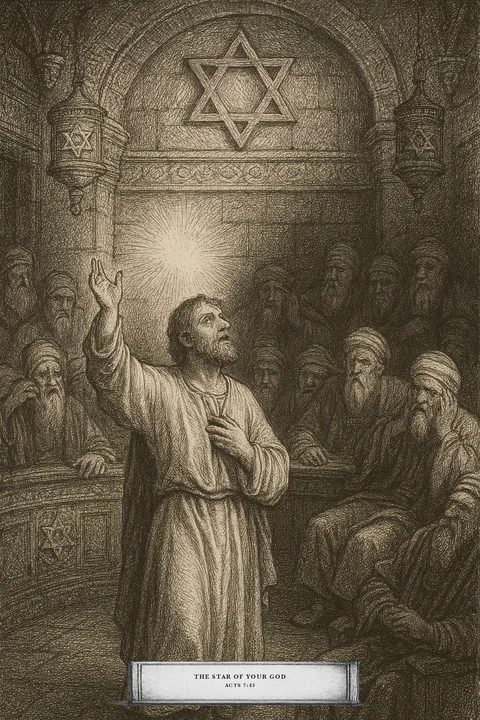
The Day of Saturn
If you are still not convinced by the argument for a Lunar Sabbath, let’s take a moment and consider the arguments for and against Saturday without proposing the Lunar Sabbath. Does Saturday stand on its own merit or does it have enough baggage to cause us to search deeper? The seven-day cycle is inherently a tradition of men because it is knowable only on the basis of the testimony of our fathers. Most sabbath debates focus on Saturday vs Sunday and whether man has authority to change it. There is no real dispute that there was a change from Saturday to Sunday; what most people dispute is man’s right to change it, and I have already thoroughly covered that the space-time of the Sabbath has been declared holy. All the energy spent on the Saturday-vs.-Sunday debate takes the focus off the real issue: the unquestioned assumption that Saturday has always been the seventh day of the week and that Jesus confirmed Saturday by virtue of not explicitly speaking against it in the Bible.
This argument from silence is built on the following quote from Josephus, which states that everyone — Jew, Greek, and barbarian — rests on the seventh day.
There is not any city of the Grecians, nor any of the barbarians, nor any nation whatsoever, whither our custom of resting on the seventh day hath not come, and by which our fasts and lighting up lamps, and many of our prohibitions as to our food, are not observed.
Against Apion 2.1.40
What is casually left out is that this was written toward the end of Josephus’ life around 93 AD, over 20 years after the temple fell and 60 years after Jesus’s death. Twenty years is enough for an entire new generation to be born and raised with no memory of how things were before them.
Any competing calendars potentially observed by the temple priests were lost in the ashes and downfall of the levitical priesthood’s power and the popular Rabbinic calendar took over. Consider what Josephus says about the competing doctrines of the day:
What I would now explain is this, that the Pharisees have delivered to the people a great many observances by succession from their fathers, which are not written in the laws of Moses; and for that reason it is that the Sadducees reject them, and say that we are to esteem those observances to be obligatory which are in the written word, but are not to observe what are derived from the tradition of our forefathers. And concerning these things it is that great disputes and differences have arisen among them, while the Sadducees are able to persuade none but the rich, and have not the populace obsequious to them, but the Pharisees have the multitude on their side.
Antiquities 13.297 (~93 AD)
The high priests controlled the Temple, sacrifices, calendar decisions (including intercalation for festivals), and day-to-day Temple operations. This made the Sadducees the de facto religious authorities in practice, even if the Pharisees had greater popular sway. Caiaphas (high priest c. 18–36 CE), the one who presided over Jesus' trial (John 11:49–53; 18:13–24), was identified as a Sadducee by Josephus.
But the high priest rose up, and all who were with him (that is, the sect of the Sadducees), and they were filled with jealousy and arrested the apostles and put them in the public prison.
In Jewish War 2.17.8–10 (2.409–410), Josephus notes that during the revolt (66 CE), the high priestly families (Sadducean) and their retainers were targeted by the rebels precisely because of their elite status and collaboration with Rome. Therefore, any practice of the Sadducean sect was likely destroyed when the temple fell and was documented as being broadly unpopular with the masses. This unpopularity supports the notion that after 20+ years, it would be long forgotten, and the few who remembered it would not be worth noting when Josephus said “no city without the custom,” as clearly not everyone in every city kept the customary Sabbath.
The masses likely moved on to “popular” Saturday observance, which aligned more seamlessly with the surrounding pagans. While these quotes cannot prove that there was a difference in calendar, they do effectively refute the presumption that there was uniformity between popular practice and temple practice. If Jesus followed the temple practice, then no one could criticize him, even if he followed a different practice from the Pharisees, and Jesus would have no need to lecture people about different Sabbath days when those in power were already keeping the same one as He was and his actions spoke for themselves.
Even without this line of reasoning, the plain text of Josephus' quote is compatible with multiple calendars with different definitions of the “7th day” as he makes no clear reference to Saturday or a continuous cycle. If we want to get to the origin of Saturday, then we need to look elsewhere.
Origin of Planetary Week
Roman poet Albius Tibullus (c. 55–19 BCE) provides the first known mention of a planetary day name in Latin literature, referring to "Saturn’s day" as an unlucky or sacred day for activities. This is from his Elegies (Book 1, Poem 3, line 18), composed around 27–19 BCE. It indicates awareness of Saturn’s day within an emerging planetary framework, though not yet a full weekly cycle description.
Often too auguries and evil omens frighten me, / Often too Saturn’s sacred day with its rosy light.
Elegies 1.3.17–18 (c. 27–19 BCE)
This suggests Saturn’s day was already culturally recognized as inauspicious, aligning with astrological taboos—evidence of the planetary week’s nascent form in late Republican Rome.
The first identifiable full date linked to a planetary day name is from a graffito in Pompeii (destroyed 79 AD), referencing "dies Solis" (Sunday). It reads: "VIII IDVS FEBRVARIVS DIES SOLIS", translated:
Eighth day before the Ides of February, day of the Sun.
This represents the end of the crumb trail of evidence that connects Sunday to a continuous cycle of 7 days from modern times. Everything else is inference and assumption.
In Roman History (37.18–19), Dio Cassius explains that the 7-day planetary week originated with the Egyptians and was adopted by the Romans, who adjusted the order slightly. He notes that the sequence of days—Saturn, Sun, Moon, Mars, Mercury, Jupiter, Venus—arises from the “planetary hours” system: each day is divided into 24 hours, starting at sunrise, with the first hour ruled by the planet that names the day. The 25th hour (the first of the next day) falls three planets ahead in the Chaldean order (Saturn → Jupiter → Mars → Sun → Venus → Mercury → Moon), producing the familiar week cycle. This astrological method, rooted in ancient Egyptian and Babylonian traditions, shows the week’s pagan origins rather than a direct biblical mandate.
The custom, however, of referring the days to the seven stars called planets was instituted by the Egyptians, but is now found among all mankind, though its adoption has been comparatively recent; at any rate the ancient Greeks never understood it, so far as I am aware. But since it is now quite the fashion with mankind generally and even with the Romans themselves…, I wish to write briefly of it.… I have heard two explanations, which are not difficult of comprehension, it is true, though they involve certain theories. For if you apply the so-called “principle of the tetrachord” (which is believed to constitute the basis of music) to these stars, by which the whole universe of heaven is divided into regular intervals, in the order in which each of them revolves, and beginning at the outer orbit assigned to Saturn, then omitting the next two name the lord of the fourth, and after this passing over two others reach the seventh, and you then go back and repeat the process with the orbits and their presiding divinities in this same manner, assigning them to the several days, you will find all the days to be in a kind of musical connection with the arrangement of the heavens. This is one of the explanations given; the other is as follows. If you begin at the first hour to count the hours of the day and of the night, assigning the first to Saturn, the next to Jupiter, the third to Mars, the fourth to the Sun, the fifth to Venus, the sixth to Mercury, and the seventh to the Moon, according to the order of the cycles which the Egyptians observe, and if you repeat the process, covering thus the whole twenty-four hours, you will find that the first hour of the following day comes to the Sun. And if you carry on the operation throughout the next twenty-four hours in the same manner as with the others, you will dedicate the first hour of the third day to the Moon, and if you proceed similarly through the rest, each day will receive its appropriate god. This, then, is the tradition.
Roman History 37.18–19 (c. 229 CE; Loeb Classical Library translation, Earnest Cary)
This quote is quite involved, so here is the table that shows how the hourly system produces the order of the day names starting with Saturn / Saturday.
| Day # | Roman / Ruling Planet (First Hour) | Full Day’s Hour Sequence (Simplified: Shows how remainder advances) |
|---|---|---|
1 |
Saturn |
Hours: Saturn, Jupiter, Mars, Sun, Venus, Mercury, Moon (repeat x3 +3: ends with Sun) |
2 |
Sun (advances 3 from Saturn) |
Hours: Sun, Venus, Mercury, Moon, Saturn, Jupiter, Mars (ends with Moon) |
3 |
Moon (advances 3 from Sun) |
Hours: Moon, Saturn, Jupiter, Mars, Sun, Venus, Mercury (ends with Mars) |
4 |
Mars (advances 3 from Moon) |
Hours: Mars, Sun, Venus, Mercury, Moon, Saturn, Jupiter (ends with Mercury) |
5 |
Mercury (advances 3 from Mars) |
Hours: Mercury, Moon, Saturn, Jupiter, Mars, Sun, Venus (ends with Jupiter) |
6 |
Jupiter (advances 3 from Mercury) |
Hours: Jupiter, Mars, Sun, Venus, Mercury, Moon, Saturn (ends with Venus) |
7 |
Venus (advances 3 from Jupiter) |
Hours: Venus, Mercury, Moon, Saturn, Jupiter, Mars, Sun (ends with Saturn) |
8 |
Saturn (cycles back) |
Repeats Day 1 pattern. |
These days had superstitious ideas associated with them that are directly connected to forbidden practices of astrology:
You are wearied with your many counsels; let them stand forth and save you, those who divide the heavens, who gaze at the stars, who at the new moons make known what shall come upon you. Behold, they are like stubble; the fire consumes them; they cannot deliver themselves from the power of the flame.
ESV
| Day # | Egyptian/Chaldean Ruling Planet | Notes |
|---|---|---|
1 |
Saturn |
Farthest planet; often considered ominous. |
2 |
Jupiter |
Benevolent, expansive influence. |
3 |
Mars |
Associated with war and energy. |
4 |
Sun |
Central light-bringer. |
5 |
Venus |
Love and beauty. |
6 |
Mercury |
Communication and commerce. |
7 |
Moon |
Closest; governs tides and emotions—then cycles back to Saturn. |
Dio Cassius (c. 229 CE) credits the Egyptians with originating the planetary week, explaining its mechanics through the "planetary hours" system. While his account aligns with Hellenistic astrological texts and reflects the common belief among educated Romans, it represents a second-hand tradition rather than direct evidence from ancient Egyptian sources. The system likely emerged in Ptolemaic Egypt as a Greco-Babylonian synthesis, not as a purely indigenous Egyptian practice.
The planetary-hour calculation was not unique to Dio. Vettius Valens, an astrologer working in Egypt in the second century CE, also derives the order of the planetary days from their hourly rulers in Anthologies 1.10. Valens does not attribute the custom’s invention to the Egyptians; that attribution is Dio’s.
Recall that long before the 10 commandments, around the first Passover, God gave his first command, a calendar command:
The Lord said to Moses and Aaron in the land of Egypt, 'This month shall be for you the beginning of months. It shall be the first month of the year for you.'
You shall not do as they do in the land of Egypt, where you lived, and you shall not do as they do in the land of Canaan, to which I am bringing you. You shall not walk in their statutes. You shall follow my rules and keep my statutes and walk in them. I am the Lord your God.
ESV
Scripture then continuously warns about worshiping the sun, moon, and stars. And when it says worship it means to serve or follow, and not our modern concept of singing praises.
And beware lest you raise your eyes to heaven, and when you see the sun and the moon and the stars, all the host of heaven, you be drawn away and bow down to them and serve them, things that the Lord your God has allotted to all the peoples under the whole heaven.
ESV
…transgressing his covenant, and has gone and served other gods and worshiped them, or the sun or the moon or any of the host of heaven, which I have forbidden…
And he deposed the priests whom the kings of Judah had ordained to make offerings in the high places at the cities of Judah and around Jerusalem; those also who burned incense to Baal, to the sun and the moon and the constellations and all the host of heaven.
By the time this system reached widespread use in the Roman world (first century BCE onward), cultural and religious shifts began to reposition Sunday as the practical "first" day. The Sun—central, life-giving, and increasingly worshiped in the late Empire (especially under the Sol Invictus cult)—gained prominence. Roman inscriptions and graffiti, like the Pompeii record from 60 CE naming a date as "dies Solis," already treated Sunday as a notable starting point in daily reckoning. This elevation was not a change in the underlying planetary sequence but a cultural reframing: the week could be listed or observed beginning with the Sun’s day, pushing Saturn to the end as the seventh.
The decisive promotion came under Emperor Constantine in 321 CE. In his famous edict, Constantine declared:
On the venerable Day of the Sun let the magistrates and people residing in cities rest, and let all workshops be closed.
This made Sunday the official first day of the civil week and a mandatory rest day across the Empire—blending emerging Christian observance (the Lord’s Day as resurrection day) with lingering solar reverence. The planetary names remained unchanged (Saturday stayed Saturn’s day), but the week’s "head" shifted to Sunday in calendars, law, and custom. What began as an astrological cycle rooted in Egypt’s star-lore had morphed, through Roman adaptation and Christian influence, into a structure where Sunday stood first—leaving Saturday as the close of the cycle rather than its beginning.
This change in custom was likely supported by the Jews whom Stephen accused of worshipping Saturn right before he was stoned. With Saturday moved to the 7th day of the week by Roman convention it now trivially aligned with the scriptural command to rest on the 7th day.
Then God turned, and gave them up to worship the host of heaven… Yea, ye took up the tabernacle of Moloch, and the star (day) of your god Remphan (Saturn), figures which ye made to worship them: and I will carry you away beyond Babylon.
The six-pointed star—known as the Star of David in Judaism—appears in remarkably similar forms across many ancient and religious traditions, suggesting a shared symbolic archetype far older than its modern Jewish association. In Hinduism, the Shatkona (six-pointed star formed by two interlocking triangles) represents the union of Shiva (upward triangle) and Shakti (downward triangle), symbolizing cosmic balance and the merging of male/female energies. Buddhism employs the same hexagram in some yantras and mandalas, often as a symbol of harmony between wisdom and compassion or the six realms of existence. Tibetan and Indian esoteric traditions also use it in protective diagrams and deity iconography. Even earlier, the hexagram appears in Mesopotamian, Phoenician, and alchemical contexts as a symbol of the macrocosm/microcosm union or planetary balance. This widespread use—from Indian mysticism to Near Eastern seals—shows the six-pointed star as a universal geometric motif long predating its adoption as the exclusive emblem of Judaism, where it only became prominent in the Middle Ages.

The connection to Saturn is confirmed by Tacitus, who claims the Jews owe the basic principles of their religion to the god of Saturn, and they chose the seventh day because it is a day of idleness.
They [the Jews] are said to have dedicated the seventh day to rest because that day brought an end to their toils; but in fact they chose it because it is a day of idleness, and for the sake of pleasure. Others say that it is an observance in honor of Saturn, either because they owe the basic principles of their religion to the Idaei (who are supposed to have been expelled with Saturn from his kingdom and to have left behind the name 'Saturnian' for the land of Italy), or because, of the seven stars which rule mankind, the star of Saturn is in the highest orbit and exercises the mightiest influence, and because many of the heavenly bodies move in orbits of seven-day periods. For this reason the seventh day has been set aside for rest, in honor of Saturn. These are plausible theories, but the Jews observe the seventh day not so much because of any religious scruple as because it is a day of idleness, and they are given over to pleasure. The rest of their customs are base and abominable, and owe their persistence to their own perversity.
Histories 5.4 (Loeb Classical Library translation)
This aligns with the superstition we already saw from Tibullus that Saturday had bad omens. It is considered “unlucky” to begin any undertaking.
If this were a court trial and you had to prove beyond reasonable doubt that the 7-day cycle was uninterrupted back to creation, then the evidence presented so far suggests that Saturday was known as the first day of the week going back to ancient Egypt, and it wasn’t until Roman times that it got moved to the seventh day of the week. The Jews fell into pagan Saturn/Moloch worship and went along with the pagan 7-day cycle, adapting their interpretation of the commandment to ease integration with the broader culture.
Saturn in the Bible
Saturn’s trail runs through the Bible itself — through ancient idolatry, demonic worship, and even the number of the beast. The word "devils" in some translations appears in contexts of false worship:
And they shall no more offer their sacrifices unto devils (Satyr), after whom they have gone a whoring. This shall be a statute for ever unto them throughout their generations.
The Hebrew word here transliterates to "Satyr," which sounds suspiciously like "Satur" and refers to a hairy he-goat, possibly a demon-possessed entity in pagan rituals. It’s not a stretch to see echoes of Saturn, the Roman god often depicted with goat-like features in later mythology.

And he (Jeroboam) ordained him priests for the high places, and for the devils (Satyr), and for the calves which he had made.
Jeroboam’s idolatry involved these "Satyr" figures alongside golden calves, blending northern kingdom apostasy with foreign gods. Now tie this to explicit star worship:
But ye have borne the tabernacle of your Moloch and Chiun (Rephan/Saturn) your images, the star of your god, which ye made to yourselves.
According to sources like Nelson’s Bible Dictionary, Chiun or Rephan represents the star-god Saturn, equated with Moloch—the deity demanding child sacrifices. Historically, Saturn’s worship originated in Babylonian Chaldea, linked to Nimrod (Genesis 10:8-10), the rebellious hunter-king who founded Babel.
In Chaldean, Saturn is "Satur," but in Aramaic, it’s "STUR," with letters summing to 666 in gematria—a direct nod to the beast’s number.
Here is wisdom. Let him that hath understanding count the number of the beast: for it is the number of a man; and his number is 600, 60 and 6.
The six-pointed star, often called the Star of David today but absent from biblical descriptions of Israelite symbols, could symbolize this "star of your god."

Early church fathers like Tertullian decried these Saturn-festivals infiltrating Christian practice, while rabbinic Judaism post-70 AD standardized Saturday amid Roman rule, possibly to align with "dies Saturni" and avoid persecution.
Scripture suggests that they adopted false sabbaths:
Ye who are approaching the evil day (Day of the LORD), who are drawing near and adopting false sabbaths.
LXX
This LXX rendering warns of "false sabbaths," implying counterfeits amid idolatry. So if Saturday went back to creation, what “false sabbaths” is Amos referring to? Some will claim it points to Sunday or Lunar Sabbath followers, but how can we know the ground truth?
Jeremiah gives a prophetic warning that the determining factor in whether Jerusalem will be destroyed is whether they kept the Sabbath.
And it shall come to pass, if ye diligently hearken unto me, saith the LORD, to bring in no burden through the gates of this city on the sabbath day, but hallow the sabbath day, to do no work therein; then shall there enter into the gates of this city kings and princes sitting upon the throne of David… and this city shall remain for ever. And they shall come from the cities of Judah, and from the places about Jerusalem… bringing burnt offerings, and sacrifices, and meat offerings, and incense… unto the house of the LORD. But if ye will not hearken unto me to hallow the sabbath day, and not to bear a burden, even entering in at the gates of Jerusalem on the sabbath day; then will I kindle a fire in the gates thereof, and it shall devour the palaces of Jerusalem, and it shall not be quenched.
We know for a fact that Jerusalem was consumed by fire when the temple was destroyed in 70 AD. If the Sabbath space-time is what is holy and the Jews reinterpreted the pattern of six days of work plus one day of rest to be of higher importance than the actual time, then the result would be to treat the real space-time of the sabbath day as a work day and then zealously rest on a real work day.
The Second Temple was destroyed even though they were occupied with Torah, mitzvot, and acts of kindness, because at that time baseless hatred prevailed.
Yoma 9b
Since the Bible consistently shows the extreme lengths the Sadducees and Pharisees would go to enforce “rest” on the sabbath, even preventing people from carrying a mat or healing, it stands to reason that it is more likely that the calendar changed when the Sadducees gave in to political pressure of the masses than that they abandoned the Sabbath altogether.
The Talmud, which was only written down centuries later, claims that the reason for the temple’s fall was desecration of the Sabbath and cites Ezekiel as evidence. Thus, the question isn’t whether the Sabbath was profaned but how it was profaned, and changing the day would entirely profane it by making the actual space-time sanctified by God a workday even as they treat a workday with extreme zeal for rest.
Abaye said: Jerusalem was destroyed only because people desecrated the Shabbat in it, as it is stated: 'And from My Shabbatot they averted their eyes, and I was profaned among them' (Ezekiel 20:24).
Yoma 9b (c. 500 CE)
Jerusalem was destroyed only due to the desecration of the Sabbath.
Shabbat 119b (c. 500 CE)
Was Jeremiah’s Prophecy Already Fulfilled?
Now some may claim that Jeremiah’s prophecy was already fulfilled when the first temple was destroyed. To assert that a biblical prophecy like Jeremiah’s warning has been conclusively and singularly fulfilled in a past event—such as the Babylonian destruction of the First Temple—betrays an unwarranted confidence in limiting divine revelation to a solitary historical moment. Such claims often stem from a rigid, reductionist hermeneutic that overlooks the multifaceted nature of Scripture, where prophecies frequently unfold in layers: an immediate application serving as a type or shadow for broader, enduring truths. This pattern is evident throughout the biblical canon, from the dual echoes of Isaiah’s Immanuel sign (near-term reassurance amid Assyrian threats, yet pointing to the Messiah) to the apocalyptic visions in Daniel and Revelation, which scholars across traditions recognize as having both proximate and ultimate realizations. By insisting on a "one-and-done" interpretation, one presumes to circumscribe God’s timeless sovereignty, as if the unchanging character of the Divine (Malachi 3:6; Hebrews 13:8) could not extend principles of covenant faithfulness and judgment across the ages.
This approach is presumptuous because it elevates human exegesis to an infallible arbiter of prophetic intent, ignoring the humility required when engaging sacred texts that invite ongoing discernment. It overreaches by demanding absolute closure where the text itself allows for ambiguity—Jeremiah’s conditional promise of perpetual habitation for Jerusalem if the Sabbath is honored speaks not merely to a specific era but to an eternal ethic of obedience, potentially reverberating in subsequent crises like the Roman siege of 70 CE. And it functions as an argumentative shortcut, a rhetorical dismissal that sidesteps substantive dialogue by shifting the onus onto others to prove multiplicity, rather than substantiating the claim of exclusivity.
At the heart of the matter lies the principle of epistemic humility in theological debate: the burden of proof rests squarely on those who posit a definitive, singular fulfillment, for they must demonstrate—through textual, historical, and theological evidence—that no further application is conceivable or intended. In contrast, to suggest the possibility of multiple layers requires only a reasonable showing that the prophecy’s language and themes align with later events, without necessitating ironclad proof of duality. Mere plausibility suffices to challenge such absolutism, fostering a more open inquiry that honors the depth and dynamism of God’s word rather than confining it to the confines of one historical footnote.
100 Languages Call Saturday Sabbath
Some claim that over one hundred languages naming the seventh day after “Sabbath” (sábado, subbota, etc.) is proof that the seven-day cycle has been preserved unchanged since creation or Moses. Yet this pattern is not ancient or universal evidence—it is the footprint of Roman and Christian expansion. The word “Sabbath” comes from Hebrew shabbat through Greek sabbaton and Latin sabbatum, spreading across the Roman Empire and beyond via the Church after Constantine’s 321 CE edict formalized the planetary week. Most of these languages belong to regions evangelized by Latin Christianity (Romance, Slavic, parts of Africa and Asia) or colonized later; they reflect post-biblical missionary influence, not pre-Christian knowledge. English keeps “Saturday” from the Roman dies Saturni, and Germanic forms like Samstag blend “Sabbath” with pagan roots only after Christianization in the early Middle Ages. No Sumerian, Egyptian, Chinese, or pre-Hellenistic language has a native “Sabbath” term for the seventh day before contact with Judaism or Christianity. What looks like global testimony is actually the echo of one dominant tradition overtaking others—not proof of divine continuity from Eden, but evidence of how powerfully Roman culture and the Church reshaped time itself. True continuity must be sought in Scripture alone, not in the names men have given the days.
Evidence from Early Church Fathers on Sabbath/Sunday Distinction Without Cycle Change
Here is an argument that many Saturday advocates will make. They claim early church fathers like Ignatius (c. 35–107 CE), bishop of Antioch and a disciple of the apostle John, provide direct testimony that the Christian community distinguished the Jewish Sabbath (Saturday) from the Lord’s Day (Sunday) without suggesting any disruption or change in the seven-day cycle. In his Epistle to the Magnesians (chapter 9), Ignatius writes:
If, therefore, those who were brought up in the ancient order of things have come to the possession of a new hope, no longer observing the Sabbath, but living in the observance of the Lord’s Day, on which also our life has sprung up again by Him and by His death—whom some deny, by which mystery we have obtained faith, and therefore endure, that we may be found the disciples of Jesus Christ, our only Master…
Epistle to the Magnesians 9 (c. 107 CE)
Interpretations of this passage assume the Sabbath remains the seventh day (Saturday) as known from Jewish tradition, while Christians shift focus to Sunday (the first day) as the resurrection day. They claim Ignatius doesn’t indicate a "lost" or reordered cycle; he simply contrasts the old (Sabbath) with the new (Lord’s Day) within the same weekly framework. Similarly, Justin Martyr (c. 100–165 CE) in his First Apology (chapter 67) describes Christian worship on Sunday without implying any calendar shift:
And on the day called Sunday, all who live in cities or in the country gather together to one place, and the memoirs of the apostles or the writings of the prophets are read, as long as time permits…
First Apology 67 (c. 155 CE)
Justin explains Sunday as the day of creation’s first light and Christ’s resurrection, positioning it as the first day after the Jewish Sabbath—preserving the seven-day order without alteration.
The problem with this line of reasoning is the assumption that the “early church fathers” hadn’t already deviated following after the pagan customs. Consider that Christianity was born out of Judaism and was heavily influenced by errors inherited from the Pharisees, and we have already covered the half-dozen verses that tell us not to do as they do. Thus, documenting a behavior 80+ years removed from the cross doesn’t actually substantiate anything other than that the same kind of corruptions impact Jews and Christians alike.
Dead Sea Scroll Evidence
Another line of argument is the Dead Sea Scroll calendar, which has a continuous weekly cycle, but this cycle is based upon a 364-day solar calendar. In order to keep synced with the weekly cycle they have to insert an undocumented week every 7 or so years. Being disconnected from the moon already reveals fundamental incompatibility with scripture. At best, this documents an ancient connection to Egypt and the planetary week.
God’s Claimed Preservation
We shall, then, put down the five millions of Jews now in the world as so many living witnesses that Saturday is the true seventh-day Sabbath. Indeed, I believe, and it is evident, that the leading object of the Lord in scattering the Jews among all nations and yet preserving them a distinct people, was to make them witnesses of the truth of His word, and to preserve the knowledge of His holy Sabbath among all nations.
The "God preserved the Sabbath" argument assumes divine intervention ensured an unbroken weekly cycle from Creation to Saturday, using Jewish continuity as proof. However, this overlooks Second Temple calendrical pluralism and popular discontent with Temple elites (Josephus, Antiquities 13.298). Claiming uniformity and implicit endorsement by Jesus ignores survivorship bias—the rabbinic calendar survived post-70 AD, but alternatives didn’t—making the link to Genesis unprovable and speculative.
Scripture explicitly states that he would temporarily take the Sabbath from them due to their idolatry and unfaithfulness, and we already established Jeremiah’s prophecy that Jerusalem would be destroyed for failure to keep the Sabbaths.
I will also cause all her mirth to cease, her feast days, her new moons, and her sabbaths, and all her solemn feasts.
The Sabbath will be restored in the 1,000-year reign, and this prophecy strongly hints at a connection between Renewed Moons and Sabbaths; it reads like “hour to hour, minute by minute,” where one is a subdivision of the other.
And it shall come to pass that from renewed moon to renewed moon, and from Sabbath to Sabbath, all flesh shall come to worship before Me.
Therefore, the argument that the Jews are the method by which the true sabbath has been preserved is unfounded. Consider that the evidence presented in this book shows that the sun, moon, and stars—all creation—testify to the truth when combined with a literal reading of Scripture that is not filtered through circular hermeneutics.
Summary
In closing, the trail of evidence leads us to a sobering conclusion: Saturday, as we know it, bears the unmistakable marks of human tradition rather than an unbroken divine mandate from creation. The continuous seven-day cycle, with its planetary names and astrological mechanics, emerged from ancient Egyptian and Babylonian star-lore, not from Scripture’s plain account of the seventh day. What began as Saturn’s day—the first in the Chaldean sequence—shifted to become the seventh in Roman practice, a reframing cemented by Constantine’s edict in 321 CE that elevated Sunday, the "venerable Day of the Sun," as the official starting point of the week. The Jews, already entangled with pagan influences through exile and intermarriage, appear to have adapted their observance to fit this broader cultural framework, aligning the seventh-day rest with Saturn’s day to ease integration with the surrounding world.
The crux of the argument for Saturday going back to creation is the unsubstantiated and logically unprovable claim that there was one and only one calendar system known and followed by Jews at the time of Jesus’s ministry. I have provided ample evidence that multiple calendars existed and that the masses often disliked the policies of those in control of the temple. Therefore, contrary to popular assertions, it is a logical fallacy rooted in survivorship bias to assert that Jesus implicitly blessed the tradition we have inherited and thereby prove the claim it goes back to creation.